Artificial Intelligence and Christians<
Artificial Intelligence and Christians: Faith, Wisdom, and the Future.
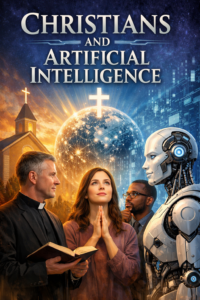 Artificial intelligence is no longer a distant concept reserved for scientists and technology companies. It is shaping everyday life—how people work, learn, communicate, shop, receive healthcare, and even practice their faith. Sermons are researched with digital tools, Bible translations are accessed instantly, and algorithms influence what people read and believe. These developments have led many believers to ask serious questions about Artificial Intelligence and Christians.
How should Christians understand artificial intelligence? Is it a threat to faith, a neutral tool, or an opportunity for faithful stewardship? Can technology coexist with biblical convictions about humanity, morality, and God’s sovereignty?
This article explores Artificial Intelligence and Christians through a theological, ethical, and practical lens. Rather than reacting with fear or blind enthusiasm, Christians are called to respond with wisdom, discernment, and trust in God.
Understanding Artificial Intelligence and Christians in Today’s World.
To engage the topic responsibly, Christians must first understand what artificial intelligence actually is. Artificial intelligence refers to computer systems designed to perform tasks that normally require human intelligence, such as pattern recognition, language processing, prediction, and decision-making.
AI does not think, believe, pray, or repent. It analyzes data and follows programmed objectives. Yet because AI mimics certain human abilities, it can feel unsettling—especially when it influences areas once guided solely by human judgment.
The discussion about Artificial Intelligence and Christians begins with clarity. Confusion breeds fear, but understanding allows believers to engage technology without surrendering faith or conscience.
Why Artificial Intelligence and Christians Are Often Seen as Opposites.
Many Christians instinctively feel tension between faith and advanced technology. This tension is not new. Throughout history, major technological shifts have prompted spiritual concern. The printing press, electricity, radio, television, and the internet all sparked fears that faith would be diluted or lost.
Artificial intelligence intensifies these concerns because it appears to challenge human uniqueness. When machines write, analyze, diagnose, and predict, people wonder what remains distinctly human.
The question behind Artificial Intelligence and Christians is not really about machines—it is about identity. Who are we? What is our purpose? Where does God fit in a world increasingly shaped by algorithms?
Christian theology has answers to these questions that remain relevant regardless of technological change.
The Image of God and Artificial Intelligence and Christians
One of the most important doctrines informing the discussion of Artificial Intelligence and Christians is the belief that humans are created in the image of God. This doctrine affirms human dignity, moral responsibility, creativity, and relational capacity.
AI can imitate intelligence, but it does not bear God’s image. It has no soul, no conscience, and no relationship with God. It cannot love God or neighbor. It cannot sin or be redeemed.
Understanding this distinction helps Christians avoid exaggerated fears. Artificial intelligence does not replace humanity’s spiritual role. Instead, it highlights what technology can never replicate—faith, hope, love, worship, and moral accountability.
Artificial Intelligence and Christians in the Workplace.
One of the most practical concerns surrounding Artificial Intelligence and Christians involves work and employment. Automation and AI-driven systems are reshaping industries, raising fears of job displacement and economic insecurity.
From a Christian perspective, work is more than income. It is a form of stewardship and service. While AI may change how work is done, it cannot eliminate humanity’s calling to contribute meaningfully to society.
Christians are called to respond not with panic, but with compassion and advocacy. This includes supporting ethical business practices, fair transitions, retraining opportunities, and policies that protect human dignity.
Faith encourages believers to trust God’s provision while engaging responsibly with economic change.
Moral Responsibility in Artificial Intelligence and Christians.
Another key issue in Artificial Intelligence and Christians is moral decision-making. AI systems increasingly influence choices about healthcare, justice, finance, and security. These are deeply ethical domains.
The danger is not that machines exist, but that humans may surrender responsibility to them. Scripture teaches that moral accountability belongs to people, not tools.
Christians must insist that AI remains under human oversight, guided by ethical principles grounded in truth, justice, and love. Delegating moral authority to machines without accountability undermines biblical responsibility.
Engaging AI ethically is part of faithful discipleship in a digital age.
Artificial Intelligence and Christians in Education and Formation.
Education is another area where Artificial Intelligence and Christians intersect powerfully. AI tools assist with research, tutoring, language translation, and personalized learning. Used wisely, they can expand access to knowledge.
However, education is not merely information transfer. Christian formation involves character, wisdom, and spiritual maturity. No algorithm can replace mentorship, community, or spiritual guidance.
Christians involved in education must ensure that technology serves learning rather than replacing human relationships. AI can support teaching, but it cannot disciple hearts.
Artificial Intelligence and Christians in the Church.
Church leaders are increasingly encountering AI in ministry contexts. From sermon preparation tools to communication platforms, technology is becoming part of church life. This raises important questions about Artificial Intelligence and Christians in worship and pastoral care.
AI can assist with administrative tasks, research, accessibility, and outreach. Used wisely, it can free leaders to focus more on relationships and spiritual care.
Yet technology must never replace prayer, discernment, or reliance on the Holy Spirit. Faith is not automated. The church must remain rooted in embodied community, sacramental life, and spiritual discernment.
AI is a tool, not a substitute for God’s work among His people.
Fear, Wisdom, and Artificial Intelligence and Christians.
Fear often shapes conversations about technology. But Scripture repeatedly calls believers to reject fear and pursue wisdom. This is especially relevant to Artificial Intelligence.
Fear leads to withdrawal or hostility. Wisdom leads to engagement and discernment. Christians are not called to reject technology wholesale, nor to embrace it uncritically.
Instead, believers are invited to test everything, hold fast to what is good, and resist what undermines love of God and neighbor.
Artificial intelligence becomes dangerous when it is idolized, trusted more than God, or used to dominate rather than serve.
Artificial Intelligence and Christians and the Question of Control.
Control is a recurring theme in discussions of Artificial Intelligence and Christians. AI systems promise efficiency, prediction, and optimization. This can tempt societies to value control over compassion.
Christian faith challenges this impulse. Scripture emphasizes humility, dependence on God, and care for the vulnerable. Technology must serve these values rather than override them.
When AI systems reinforce injustice, bias, or exploitation, Christians are called to speak prophetically. Faithful engagement includes critique as well as innovation.
Artificial Intelligence and Christians in a Global Context.
Artificial intelligence does not affect all communities equally. Global inequalities shape who benefits from technology and who bears its risks. This reality is central to a faithful understanding of Artificial Intelligence and Christians.
Christian ethics emphasize concern for the poor, marginalized, and voiceless. Believers must consider how AI impacts labor markets, surveillance, access to resources, and human rights worldwide.
Global discipleship includes technological justice. Christians cannot focus only on convenience while ignoring suffering intensified by unequal systems.
Teaching Discernment About Artificial Intelligence and Christians.
The next generation will live more deeply integrated with AI than any before it. Teaching discernment is essential to the future of Artificial Intelligence and Christians.
Children and young adults must learn not only how technology works, but how to evaluate it morally and spiritually. This includes:
Understanding limits of technology.
Resisting digital idolatry.
Practicing Sabbath and presence.
Grounding identity in Christ rather than performance.
The church’s role is formation, not fear-mongering.
Artificial Intelligence and Christians and the Sovereignty of God.
At the deepest level, the conversation about Artificial Intelligence and Christians is theological. It touches questions of trust, sovereignty, and hope.
God is not threatened by technology. Scripture affirms that all human creativity exists within God’s sovereign will. Tools may change, but God’s purposes endure.
Christians do not place their hope in machines, nor do they fear them. Hope rests in God’s redemptive work, which transcends every technological era.
A Faithful Conclusion on Artificial Intelligence and Christians.
So how should believers approach Artificial Intelligence?
With confidence rather than fear.
With wisdom rather than reaction.
With faith rather than anxiety.
Artificial intelligence is a powerful tool. Like all tools, it reflects the values of those who wield it. Christians are called to shape technology with love, justice, humility, and reverence for God.
The future will include AI. But the future does not belong to algorithms.
The future belongs to God—and Christians are called to live faithfully in every age, including this one.
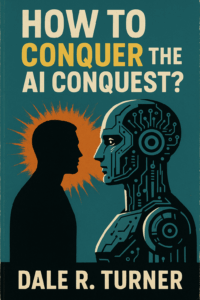 Learn more about Artificial intelligence by reading Dale R. Turner’s book, “How to Conquer the AI Conquest.